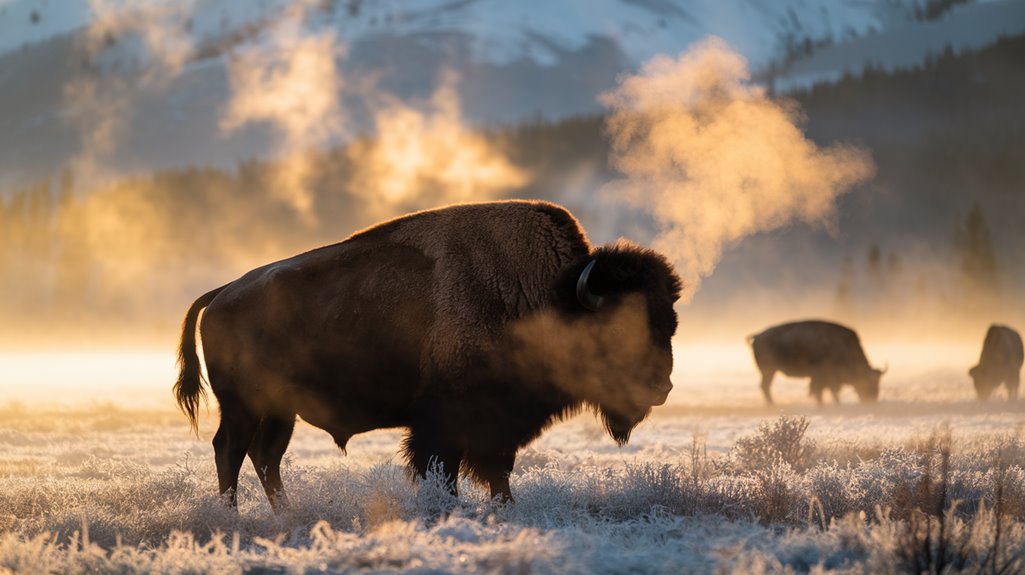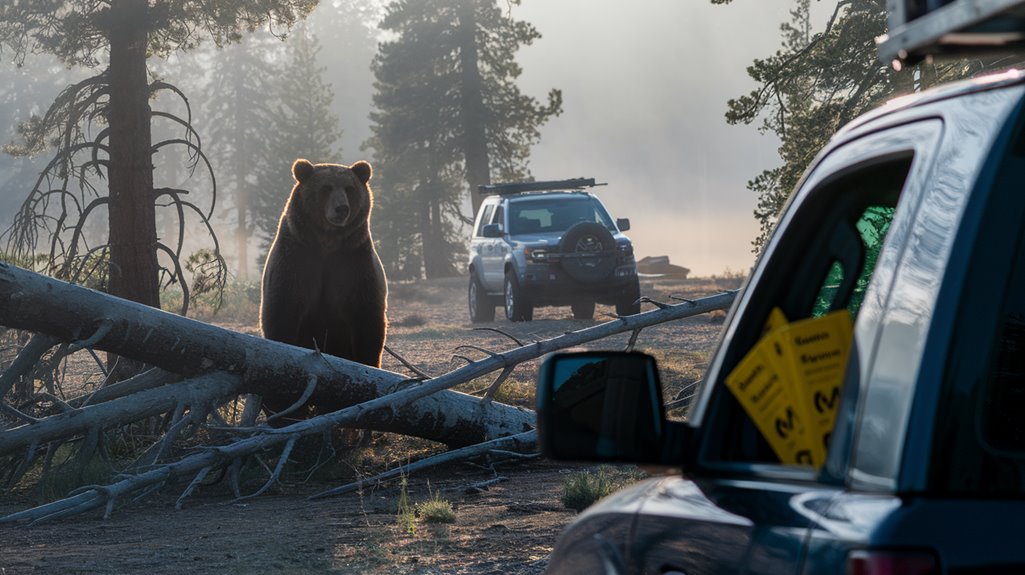

While most visitors flock to Yellowstone's geysers and hot springs, you'll find the park's elk populations have developed fascinating routines that can make your wildlife viewing predictable and rewarding. These 700-pound creatures follow specific patterns throughout the year, moving between high mountain meadows and lower elevations based on seasonal changes. If you're planning to witness Yellowstone's most iconic residents, you'll need to understand not only where they gather but also how to approach them safely. The difference between a disappointing outing and an unforgettable encounter often comes down to knowing the essential insider strategies.
Key Takeaways
- Mammoth Hot Springs and Lamar Valley offer prime elk viewing during the autumn rut from late August through early October.
- Dawn and late afternoon provide optimal viewing times when elk are most active and the park is quieter.
- Stay at least 25 yards away from elk and use binoculars or telephoto lenses for safe, clear viewing.
- Spring offers opportunities to see elk calves with fewer crowds, while winter brings elk to lower elevations.
- Madison Junction features elk along river meadows, with additional chances to spot eagles and osprey nearby.
Prime Locations for Elk
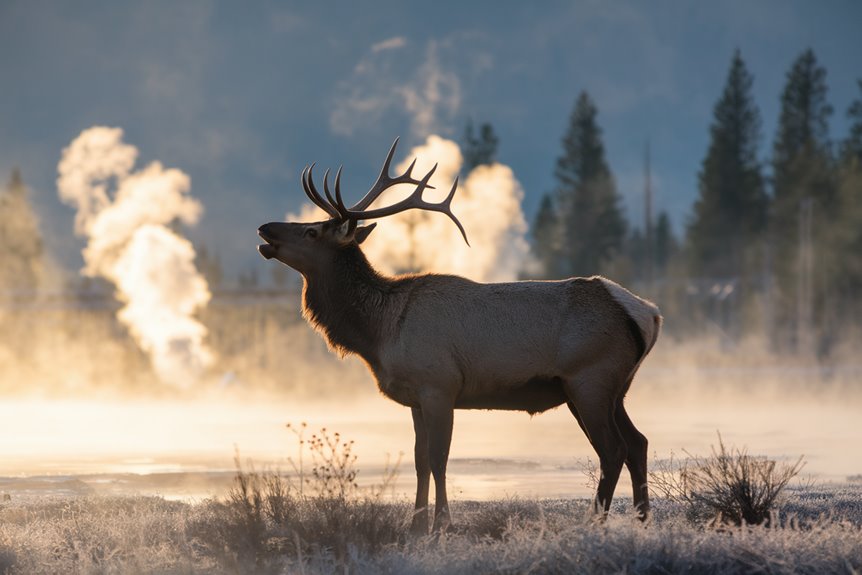
The majestic Yellowstone National Park provides several prime locations for observing its thriving elk population.
You'll find excellent viewing opportunities at Mammoth Hot Springs, especially during the autumn rut when bulls bugle and fight. The area's grasslands also attract bison, pronghorn, and mule deer against the backdrop of Gardiner River Canyon.
Lamar Valley presents early morning elk sightings in summer, along with chances to spot wolves, bears, and other wildlife.
At Madison Junction, you can watch elk along the river meadows, particularly during the fall rut, while catching glimpses of eagles and osprey.
Don't miss Elk Park, where you'll see these magnificent creatures grazing in meadows during early morning hours, making it perfect for observing their natural behaviors.
When to Watch
Successful elk watching depends largely on choosing the right time of day and season.
You'll find the best viewing opportunities at dawn when the park is quiet and elk are most active. The Lamar Valley comes alive in these early hours, providing excellent visibility and chances to hear bugling.
September and October are prime months, as the elk rut begins in early September and peaks around the 20th.
You'll see dramatic displays of bull elk competing for mates against the backdrop of fall colors.
While summer draws crowds and pushes elk to higher elevations, spring presents opportunities to spot calves.
If you're interested in combining elk watching with wolf sightings, visit in late winter when deep snow brings wildlife closer to the valleys.
Safety First

Safe elk watching requires maintaining strict distance guidelines and understanding animal behavior.
You'll need to stay at least 25 yards away from elk and be especially cautious during spring calving and fall mating seasons when they're most aggressive.
Watch for these warning signs of agitated elk:
- Grinding teeth and backward-pointing ears
- Curled lips and raised hair on rump
- Charging or territorial behavior
- Protective stance around calves
If an elk charges, quickly find shelter behind a solid object like a car or tree.
Never attempt to feed or approach elk, as it's illegal in national parks.
Use binoculars and telephoto lenses for close-up views while maintaining a safe distance.
During the fall rut, be particularly mindful of competing bull elk, which can become extremely aggressive.
Essential Viewing Tips
Now that you understand how to stay safe around elk, let's focus on maximizing your chances of spotting these majestic creatures.
Head to Lamar Valley, often called the "Serengeti of North America," or visit Mammoth Hot Springs Area during the rutting season from late August to early October. You'll find elk are most active during early mornings and late afternoons.
For the best viewing encounter, bring binoculars or a spotting scope, and consider joining a guided tour. The first week of September presents spectacular opportunities to witness the rut in action.
While summer can be good for elk watching, you'll encounter fewer crowds and better conditions during fall. The Madison River area and Gibbon Meadows are particularly reliable spots, especially during early morning hours.
Beyond the Elk
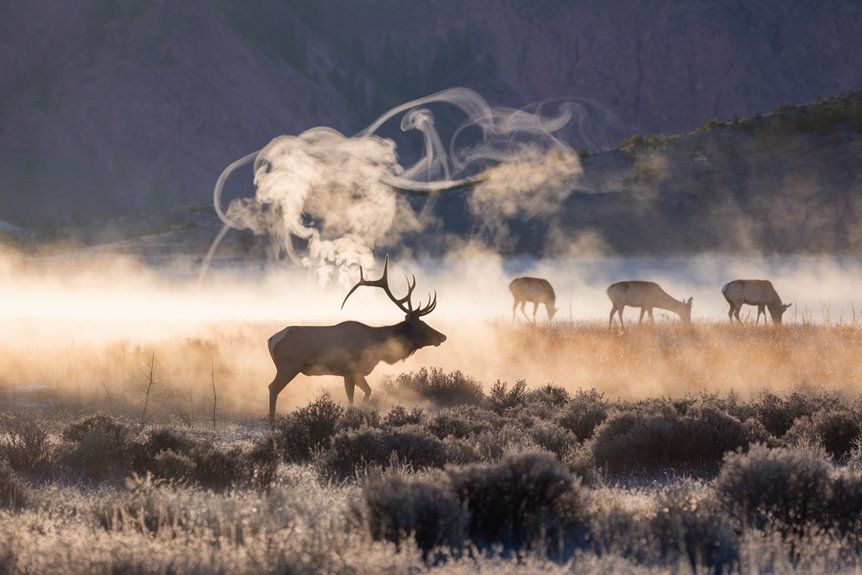
While elk rightfully command attention, Yellowstone's diverse wildlife presents countless other treasures for nature enthusiasts. You'll find exceptional wildlife viewing in Lamar Valley, often called the "Serengeti of North America," where wolves, bears, and bison roam freely.
To maximize your wildlife encounters beyond elk observing:
- Visit during dawn or late afternoon when animals are most active
- Pack high-powered spotting scopes and binoculars for distant viewing
- Consider guided tours, especially pre-dawn options like the Wake Up to Wildlife tour
- Stay informed through wildlife tracking forums for recent sighting locations
Remember to maintain safe distances (at least 25 yards) from all wildlife and use designated pullouts for viewing.
The Upper Geyser Basin and Mammoth Hot Springs areas offer year-round opportunities to spot various species, especially during winter when animals gather near thermal features.
Frequently Asked Questions
Can I Photograph Elk Using Flash Photography at Night?
While you're enthusiastic to capture nature's majesty, you shouldn't use flash photography with elk at night. It'll stress them out and disrupt their natural behavior. Use high ISO settings instead.
What Gear Should I Pack Specifically for Elk Watching?
You'll need binoculars, a spotting scope, tripod, neutral-colored clothing, sturdy boots, and water. Don't forget bear spray, first aid kit, and layers for temperature changes.
Do Elk Stay in the Same Locations During Severe Weather?
Looking for predictable elk spots during storms? You won't find them staying put. They'll move to lower elevations where snow is less deep and food is more accessible during severe weather.
Are There Designated Elk Watching Shelters or Blinds in Yellowstone?
You won't find designated elk watching shelters or blinds in Yellowstone. Instead, you'll need to observe from safe distances using binoculars or join guided tours for wildlife viewing.
How Do Seasonal Road Closures Affect Access to Prime Elk Viewing Areas?
Like a curtain falling, seasonal road closures limit your access to prime elk viewing spots. You'll find many areas unreachable from late November through May, but you can still explore open routes.