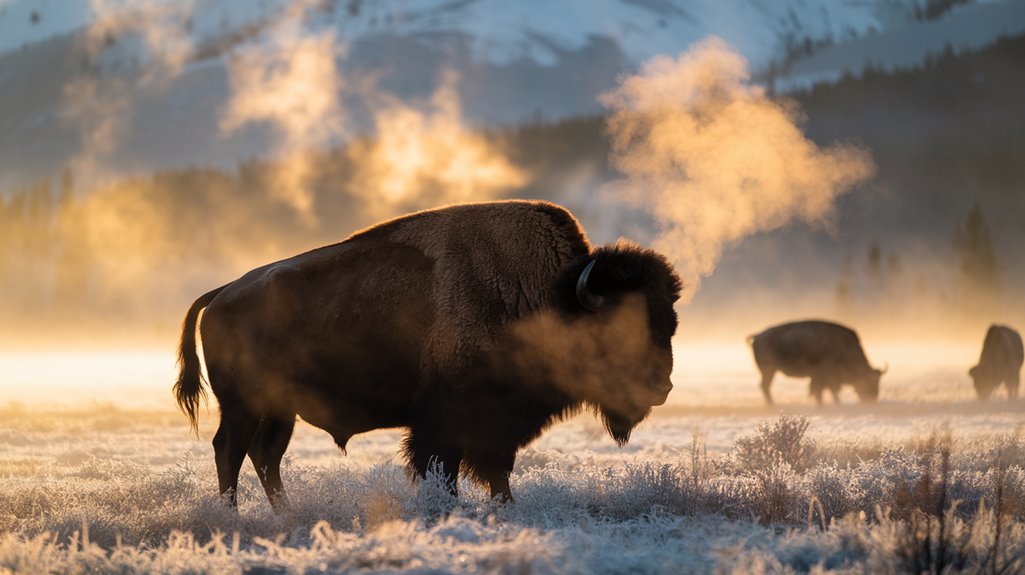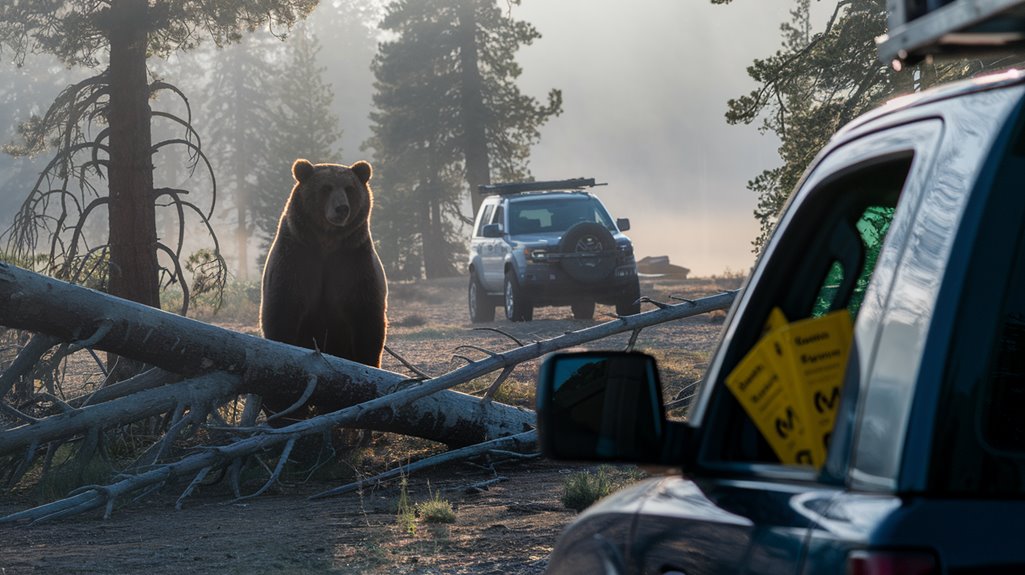
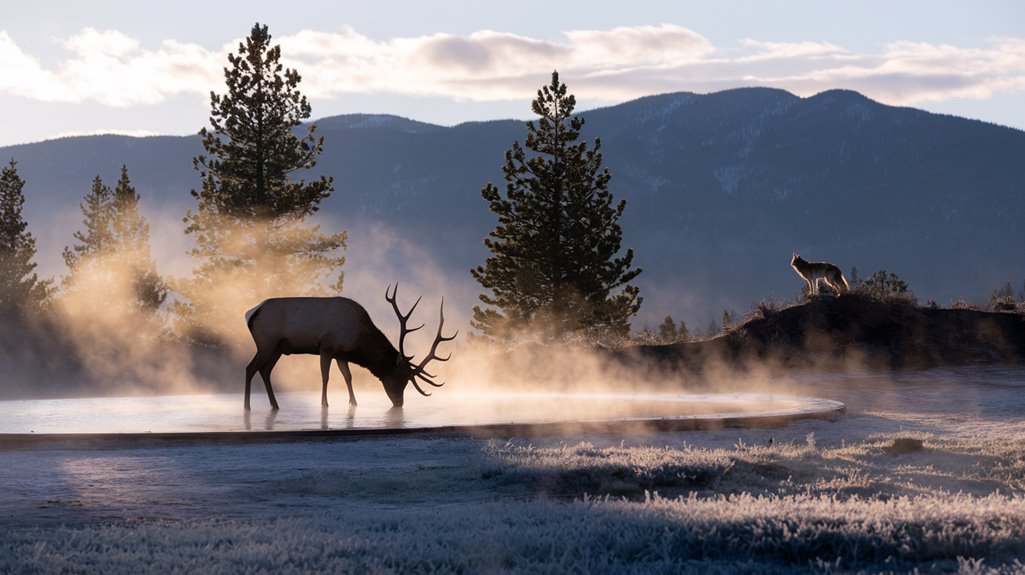
You'll uncover why seasoned wildlife photographers and naturalists consider dawn and dusk the "golden hours" in Yellowstone National Park. As the sun's first rays pierce the morning mist or its last light bathes the landscape in amber hues, the park's diverse wildlife becomes most active. During these critical feeding times, wolves emerge to hunt, grizzlies forage in mountain meadows, and herds of elk move through the valleys. Understanding when and where to position yourself during these prime viewing windows can transform your Yellowstone adventure from casual observation to extraordinary encounters.
Key Takeaways
- Dawn and dusk offer prime wildlife viewing in Lamar and Hayden Valleys, when animals are most active during feeding times.
- Pack essential gear including binoculars, spotting scope, camera with telephoto lens, and bear spray for safe wildlife observation.
- Utilize pullouts along Grand Loop Road during sunrise at Hayden Valley and sunset at Lamar Valley for best viewing opportunities.
- Stay 100 yards from bears and wolves, 25 yards from other wildlife, and never feed animals for everyone's safety.
- Track seasonal migrations between winter valleys and summer highlands to maximize chances of seeing diverse wildlife species.
The Golden Hours
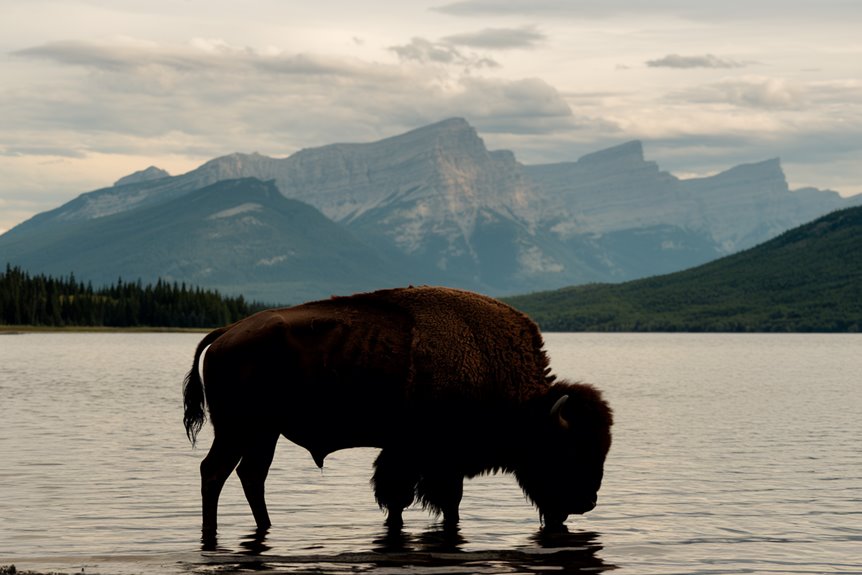
Anyone hoping to spot Yellowstone's diverse wildlife should plan around the golden hours of dawn and dusk. These periods offer your best chance to witness animals during their most active feeding times, particularly in prime locations like Lamar Valley and Hayden Valley.
During these golden hours, you'll find ideal lighting conditions for wildlife photography, with the soft, warm light creating stunning opportunities for captures. You'll want to arrive early and position yourself at strategic pullouts and overlooks.
The Northern Range is especially productive for morning viewing, while areas around Yellowstone Lake excel for evening sightings.
Remember to maintain a safe distance from all wildlife, and consider joining a guided tour like Wake Up to Wildlife for expert insights on recent animal activity and prime viewing spots.
Essential Gear For Wildlife Viewing
Success in wildlife viewing starts with having the right equipment. You'll need quality optics, including binoculars for closer viewing and a spotting scope with tripod for distant observations. A camera with telephoto lens and remote trigger will help you capture memorable encounters without disturbing the animals.
Don't overlook essential protective gear. Pack a hat, jacket, sturdy boots, and sunscreen for varying weather conditions. In bear country, always carry bear spray and keep it easily accessible.
For species identification and learning, bring field guides or use the iNaturalist app on your phone. Remember to pack extra batteries for your equipment and plenty of water for hydration.
A teleconverter can extend your camera's reach, while a second camera body allows quick shifts between different shooting situations.
Best Dawn Viewing Locations
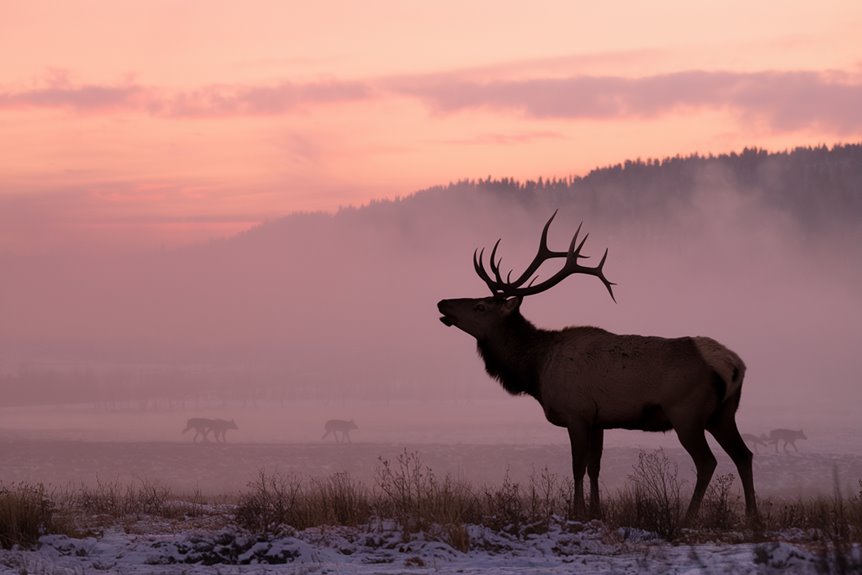
Dawn in Yellowstone provides unparalleled wildlife viewing opportunities at several prime locations.
In Hayden Valley, you'll find the best vantage points at Grizzly Overlook and the northern pullouts, where you can spot the Wapiti Lake wolf pack and grizzly bears.
Lamar Valley, often called the "American African Savannah," presents excellent pull-offs for viewing bison, wolves, and diverse wildlife.
The valley's dawn light creates perfect conditions for photography and wildlife spotting.
While Tower Fall Overlook isn't primarily for wildlife, you'll encounter fewer crowds and opportunities to see birds and small animals.
For a tranquil morning encounter, head to Yellowstone Lake's western shore near Bridge Bay Marina, where you can photograph reflective sunrise views and spot elk and waterfowl along numerous pullouts.
Prime Dusk Viewing Spots
Yellowstone's golden hours come alive as dusk approaches, presenting spectacular wildlife viewing at key locations throughout the park.
You'll find prime viewing opportunities in Lamar Valley, where wolves and grizzlies emerge to hunt, and Hayden Valley's Grand Loop Road pull-outs offer excellent vantage points for spotting large bison herds and predators.
For the best dusk wildlife viewing encounter:
- Position yourself at elevated overlooks along the Grand Loop Road before sunset
- Stay alert for clusters of parked vehicles, which often signal wildlife sightings
- Pack high-quality binoculars or a spotting scope for safe, distant observation
The Old Faithful area and East Entrance provide additional opportunities to spot elk, coyotes, and mountain goats near thermal features as daylight fades.
Wildlife Safety and Etiquette
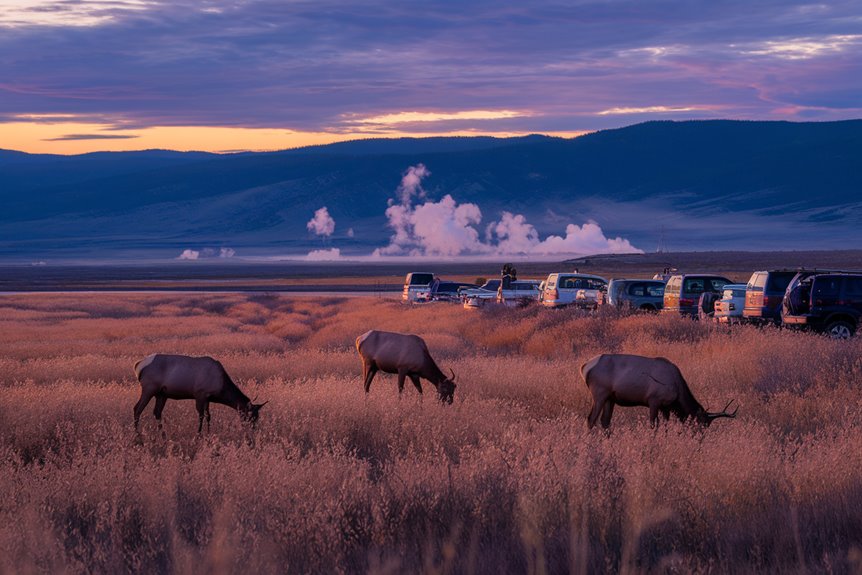
A safe wildlife encounter begins with understanding and following essential park guidelines.
You'll need to maintain at least 100 yards from bears and wolves, and 25 yards from all other animals. Never feed wildlife or attempt to attract them closer for photos, as this can lead to aggressive behavior and eventual euthanization.
When viewing wildlife, use pull-outs to avoid blocking traffic, and carry bear spray for protection.
Travel in groups of three or more, making noise while hiking to prevent surprising animals. Don't run if you encounter wildlife, as this can trigger a chase response. Instead, back away slowly while keeping your distance.
Use binoculars or telephoto lenses for closer views, and remember that mating and birthing seasons can make animals more aggressive.
Seasonal Animal Movement Patterns
Throughout the year, distinct wildlife migration patterns shape your viewing opportunities in Yellowstone.
You'll find elk, bison, and pronghorns moving between winter valleys and summer highlands as they follow seasonal vegetation growth. Predators like wolves and grizzlies track these movements, following their prey across the landscape.
To maximize your wildlife viewing success:
- Visit the northern range in winter to spot concentrated herds of elk and bison, along with their pursuing predators.
- Head to high-elevation meadows in summer to observe grazing elk and pronghorns amid flowering grasslands.
- Watch river valleys during spring and fall migrations to witness dramatic wildlife movements, including returning waterfowl and songbirds.
The park's seasonal rhythms create predictable patterns, helping you plan when and where to spot specific species.
Frequently Asked Questions
How Do Bison Herds Communicate and Coordinate Their Movements Across Valleys?
You'll observe bison using body language, grunts, and scent marking to coordinate movement. They'll follow traditional pathways and rely on visual signals across valleys for herd cohesion.
What Happens to Injured Wildlife in the Park During Extreme Weather?
You'll find that injured wildlife largely fend for themselves during extreme weather. Park policy prioritizes natural selection, and rescue efforts are rare unless an animal's condition threatens ecosystem health.
Do Wolves Hunt Differently at Dawn Compared to Dusk?
You'll notice wolves hunt similarly at dawn and dusk, but they're more successful at dawn when prey is tired from nighttime vigilance and visibility improves with growing light.
How Do Thermal Features Affect Local Wildlife Behavior Throughout the Day?
You'll witness a dramatic dance as wildlife gravitates toward thermal features at dawn, retreats to cooler areas midday, then returns at dusk seeking warmth and nutrients from these steaming sanctuaries.
Which Wildlife Species Are Most Active During Full Moon Nights?
You'll spot wolves and coyotes hunting more actively during full moon nights, while bison and elk take advantage of increased visibility for grazing. Nocturnal birds, especially owls, adjust their hunting patterns.