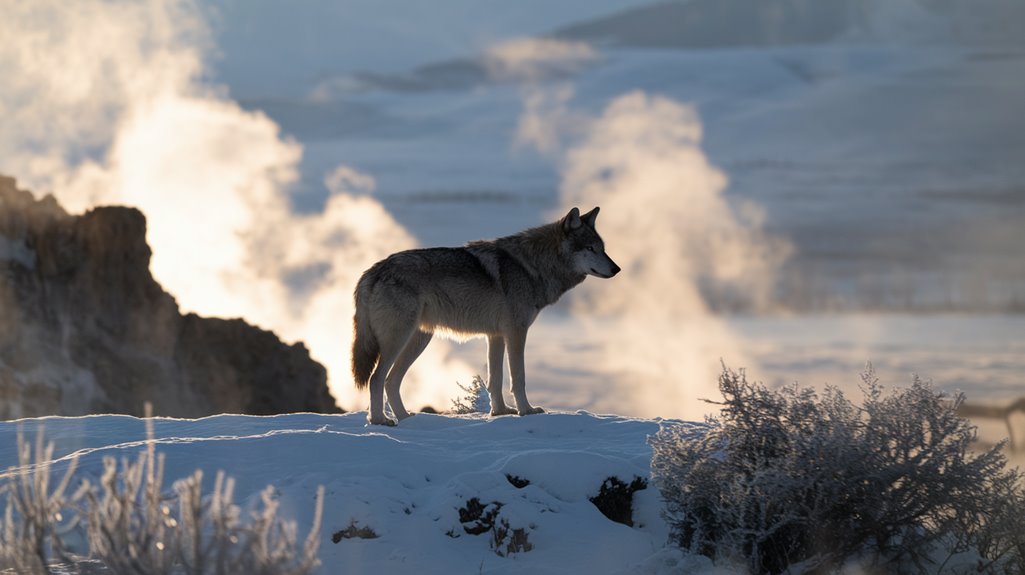
You'll uncover that wolf watching in Yellowstone isn't just about spotting these elusive predators – it's about witnessing nature's raw drama unfold before your eyes. Whether you're scanning Lamar Valley at dawn or setting up your spotting scope in Hayden Valley, each moment brings the possibility of observing these magnificent creatures in their natural habitat. While catching sight of a wolf pack might require patience and know-how, the right preparation and timing can transform your Yellowstone visit from a simple wildlife viewing encounter into an unforgettable journey that'll leave you wanting more.
Key Takeaways
- Lamar Valley and Hayden Valley offer the best wolf-watching locations with established packs and strategic viewing points along roads.
- Arrive early at dawn (7:30 AM winter, 5:00 AM summer) for optimal viewing when wolves are most active.
- Bring quality optics including 8-10x binoculars and spotting scope with tripod for successful long-distance wildlife observation.
- Winter months (January-March) provide peak viewing opportunities with better visibility against snow and fewer park visitors.
- Professional guided tours enhance experience with expert knowledge, ranging from $3,100-$3,200 for comprehensive multi-day packages.
Prime Wolf Watching Locations
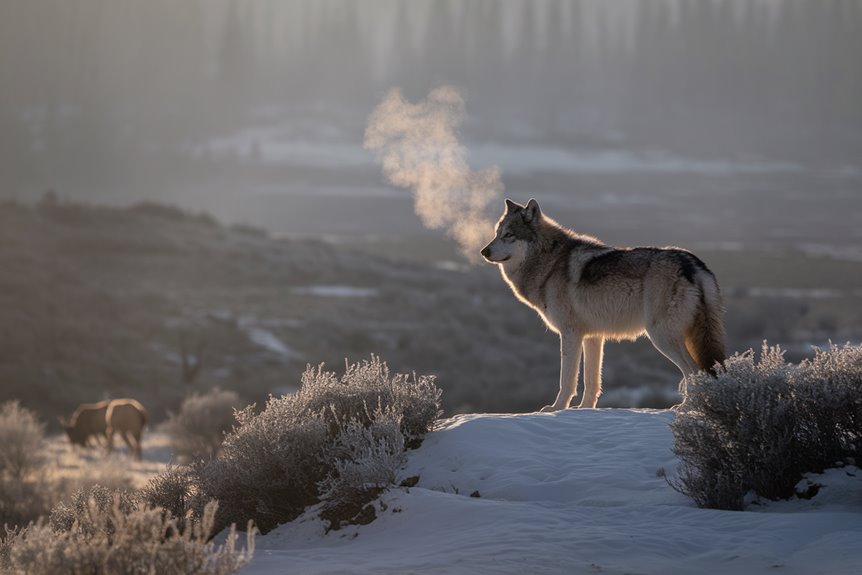
Venture into Yellowstone's prime wolf-watching territories, where four key locations present excellent opportunities to spot these majestic predators.
Head to Lamar Valley, where you'll find four wolf packs and numerous paved pull-outs along Route 212 for ideal viewing.
In Hayden Valley, you can track wolves as they follow prey along the Yellowstone River, particularly the Wapiti Lake pack that dens in the northern section.
The Tower-Roosevelt area serves as a crossroads for multiple pack territories, while the Blacktail Plateau provides elevated vantage points perfect for spotting scope setup.
You'll find the best viewing at the Forces of the Northern Range trail parking area, the plateau's highest point.
Each location provides unique advantages, from open landscapes to diverse wildlife populations that attract wolves.
Best Times to Spot Wolves
Success in wolf watching depends greatly on timing your visit. Winter months, especially January through March, offer the best viewing opportunities, with February being ideal during the mating season.
You'll find wolves are more visible against the snowy landscape, and there are fewer visitors to compete with for viewing spots.
For the best chance of spotting wolves, you'll want to arrive before sunrise. Plan to be at your viewing location by 7:30 a.m. in winter or 5:00 a.m. in summer.
Dawn and dusk are peak activity times, as wolves are crepuscular hunters. If you're visiting outside winter, consider May to see newborn pups or October when cooler weather brings wolves and their prey to lower elevations.
Essential Gear and Equipment
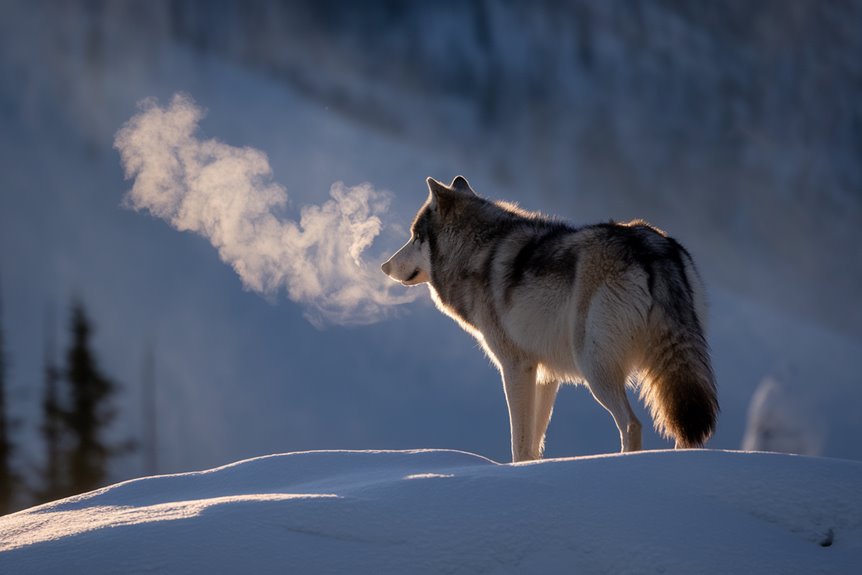
Preparation is key when packing for wolf watching in Yellowstone. You'll need quality optics, including 8-10x binoculars and a spotting scope with tripod for long-distance observation. Don't forget your DSLR camera with a powerful zoom lens to capture memorable shots.
Layer your clothing to adapt to Yellowstone's unpredictable weather. Pack a waterproof jacket, sturdy hiking boots, and sun protection. During winter months, you'll want insulated gloves and hand warmers.
Your daypack should include bear spray, a first aid kit, and navigation tools like maps or GPS devices. Keep essential supplies handy, including water bottles, field guides, and emergency gear.
Useful apps like Yellowstone SPOTR can enhance your wolf-watching adventure. Remember to bring plastic bags for keeping your equipment dry and maintaining Leave No Trace principles.
Professional Tours and Guides
Taking a guided tour with professional wolf-watching experts can greatly enhance your Yellowstone journey. Several reputable companies provide specialized wolf-watching encounters, from multi-day expeditions to private customized tours.
You'll find options ranging from $3,100 to $3,200 for thorough packages that include professional guidance and essential equipment.
- Yellowstone Wolf Tracker provides 6-day vacation packages with private guide services.
- Travel Montana specializes in 5-day wolf-watching tours with snowshoeing options.
- Silver Gate Guides offers private tours in Lamar Valley with expert naturalists.
- Yellowstone Wild Tours features winter packages and photography workshops.
- Yellowstone Naturalist-led Tours focuses on small-group carnivore encounters.
Most tours include high-quality optics, hot beverages, and snacks.
You'll get expert instruction on wolf biology and behavior while exploring prime viewing locations like Lamar and Hayden Valleys.
Wolf Pack Behavior Insights
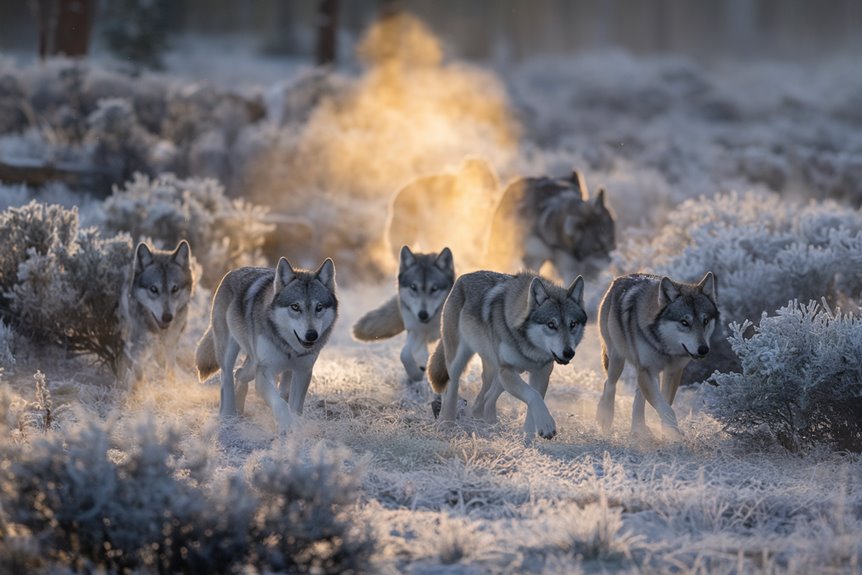
Throughout Yellowstone's wilderness, wolf packs display fascinating social structures and behaviors that make them one of nature's most sophisticated predators.
You'll observe complex family units led by an alpha pair, with pack sizes ranging from 2 to 37 members. Each pack maintains order through clear hierarchies during hunting and pup-rearing activities.
When you're watching wolves, you'll notice their rich communication methods. They use howling, growling, and body language to interact within the pack, while marking territories with scent to communicate with neighboring packs.
You'll see them work together to hunt, primarily targeting elk in winter and deer in summer. Their cooperative hunting strategies and strategic positioning demonstrate remarkable intelligence, while their kills support numerous other species in the ecosystem, from ravens to bears.
Frequently Asked Questions
Can Children Participate in Wolf-Watching Tours, and What's the Minimum Age Requirement?
Like cubs in a wolf pack, you can bring your children on wolf-watching tours. Most tours welcome kids aged 5 and up, with guides providing family-friendly activities and educational encounters.
What Happens if No Wolves Are Spotted During a Guided Tour?
If you don't spot wolves, your guide will focus on other wildlife, landmarks, and educational encounters. You'll still get to use professional equipment and may receive options for rescheduling per operator policies.
Are There Wheelchair-Accessible Viewing Areas for Wolf Watching in Yellowstone?
You'll find wheelchair-accessible viewing areas in Lamar Valley and Tower-Roosevelt area, with designated parking spots and level platforms. Use the NPS Yellowstone app's "Wheelchair Access" filter to locate them.
How Close Can Photographers Get to Wolves for Capturing Good Shots?
You'll need superhuman zoom powers, as you must stay at least 100 yards from wolves! Don't even think about getting closer – use telephoto lenses to capture stunning shots safely and legally.
Do Wolves Remain Active During Severe Weather Conditions Like Snowstorms?
You'll find wolves remain highly active during snowstorms, thanks to their double-layered fur and specialized footpads. They'll even use severe weather to their advantage when hunting vulnerable prey.